
Semantic Kernel
Microsoft's SDK to build AI agents and orchestrate models
Quick Answer
AISemantic Kernel is an open-source SDK for orchestrating AI agents and integrating them with large language models. It supports RAG and can be accessed via API. Best for developers building AI-powered applications with Microsoft technologies. Open-source.
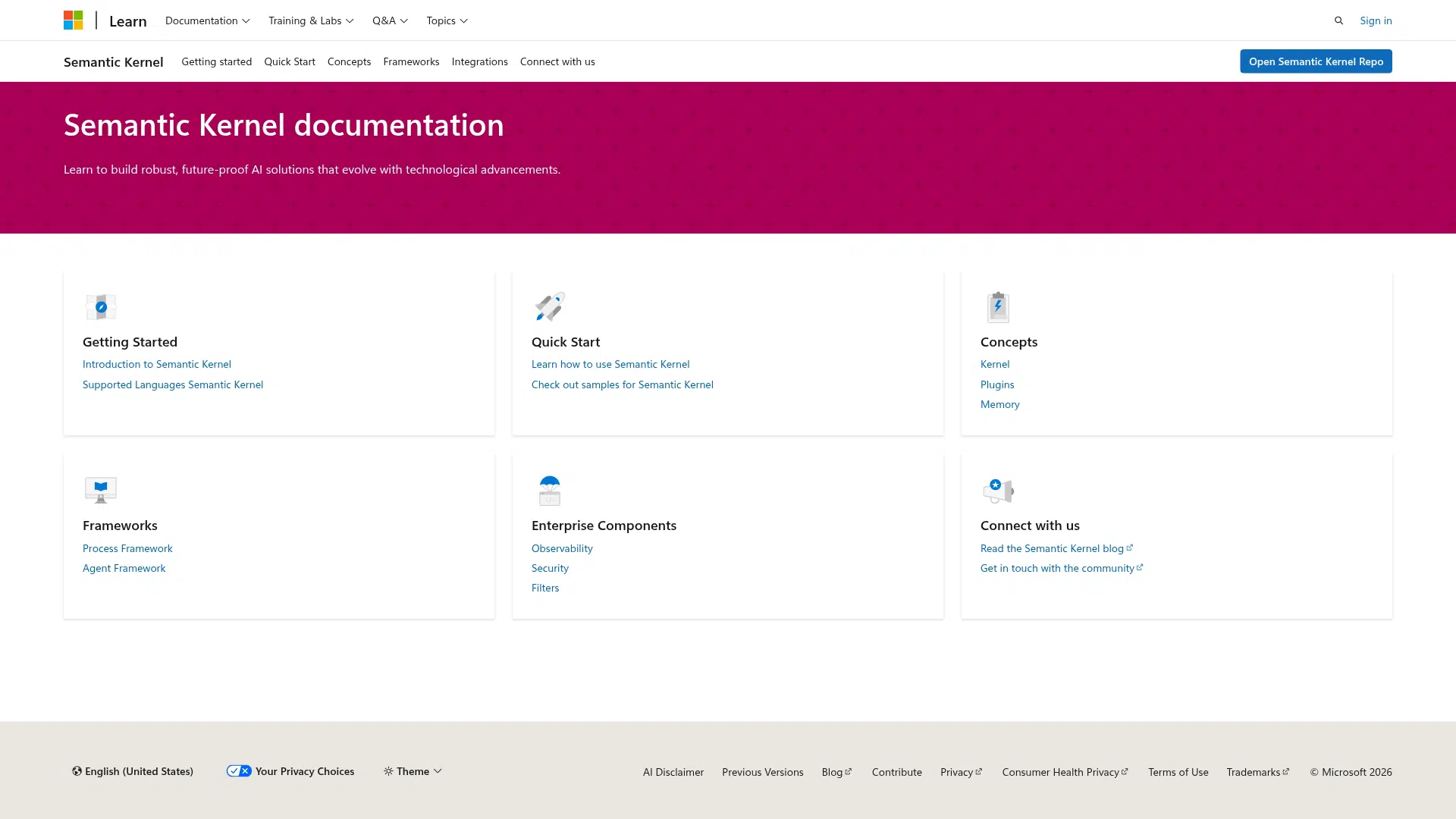
Semantic Kernel is an open-source SDK from Microsoft for building AI agents that can integrate with large language models. It allows developers to combine AI models with conventional programming languages to create intelligent applications. The SDK supports various AI services and enables agents to use external tools and data.
Semantic Kernel allows developers to create custom AI agents that leverage Microsoft's trusted documentation and integrate with various AI services, providing a flexible framework for building intelligent applications.
Decision Intelligence
Best For
AIType
Free Trial
No
Credit Card
Not Required
Free Plan
Yes
Dimension Scores
· 4.2 avgHow good it is, across universal quality axes
Task Scores
· 6.8 avgWhat it can do, per category it works in · showing 10 of 10 tasks scoring 5+
Scores are AI-estimated from publicly available data — not an independent test or a verified user rating. How we rank →
Complexity
Company Size
Target Team Size
Target Skill Level
Privacy & data handling
The Model(s) Behind It
Model details — extracted from public vendor sources by our pipeline (AI extraction plus a source check) or admin-entered. Shown as claimed by the vendor; not independently audited by Intelloro.

Trust Score
Very Good
Based on 7 data signals
Confidence: High
Reflects publicly available data, not an independent audit
No published data
Not yet checked
Some details are AI-generated estimates — verify with the vendor.
AI-generated estimate: Best For, Description, Limitations, Quick Answer, What Makes Unique
How we source dataAI Governance & Regulatory Disclosures
Legally-sensitive fields — extracted from public vendor sources by our pipeline (AI extraction plus a source check) or admin-entered. Shown as claimed by the vendor; not independently audited by Intelloro.
Switching & Migration
Pricing verified from the vendor pricing page.
User Reviews
No reviews yet. Be the first to review!
Top Semantic Kernel alternatives in the same category, ranked by quality.

Dify
The Platform for Production-Ready Agentic Workflows

Composio
Give Claude, Codex, or any harness secure access to 1500+ tools

Agenta
The open-source workspace for your agents

Pickaxe
Build AI agents for anything, sell them to anyone

Voiceflow
Enterprise conversational & voice AI agent platform

MindStudio
Build powerful AI agents
Looking for more Semantic Kernel alternatives?
Explore our complete list of alternatives with filters for free, cheaper, and higher-rated options.
Who It's For4 rolesSoftware DevelopersComputer ProgrammersWeb Developers+1 more
Platform, Content & Languages2 content types1 languagesCodeTextEnglish+4 more
Content Types
Accepts
Produces
Frequently Asked Questions
What can Semantic Kernel do?
Semantic Kernel can: Plugins from native code, OpenAPI specifications or MCP servers, Automatic function calling, Agent Framework for single and multi-agent apps, Process Framework for business processes. Best for: Developers building AI-powered applications.
How much does Semantic Kernel cost?
Semantic Kernel is open source and free to self-host. Cloud hosting options may have separate pricing.
Is Semantic Kernel free?
Yes, Semantic Kernel is open source and free to self-host. Managed hosting may carry separate costs.
What makes Semantic Kernel unique?
Semantic Kernel allows developers to create custom AI agents that leverage Microsoft's trusted documentation and integrate with various AI services, providing a flexible framework for building intelligent applications.
Does Semantic Kernel have an API?
Yes, Semantic Kernel offers a public API for developers to integrate its capabilities into custom applications and workflows.
What platforms does Semantic Kernel support?
Semantic Kernel is available on API.
What languages does Semantic Kernel support?
Semantic Kernel supports English.
Does Semantic Kernel work offline?
Yes, Semantic Kernel supports offline use — you can run it without an active internet connection.
Who is Semantic Kernel for?
Semantic Kernel is designed for Developers building AI-powered applications; Organizations looking to integrate AI with existing systems; Students learning AI development with Microsoft technologies.